What Nobody Tells Women Before They Book an Ayurvedic Retreat
Most women I consult with have already done their research. They've fixed their sleep, moved dinner earlier, tried the probiotics, and reached the point where lifestyle changes have delivered what lifestyle changes deliver and they are ready for a retreat, a well deserved reset. A supervised programme is the obvious next step, and they've started looking at centres in Kerala.
Then they hit the questions you can't put to a booking form.
Will a man be doing the massage? What happens if my period arrives on day four? Am I safe there on my own? Do I have to stop the pill?
These aren't small questions. For a fortnight of intimate, hands-on treatment in an unfamiliar country, they are the questions. And retreat websites almost never answer them, because the websites were written to convert bookings, not to prepare you.
So here are the answers, along with what to verify before you pay anything.
1. Your cycle affects your treatment dates
The main Panchakarma procedures — virechana (therapeutic purgation), basti (medicated enema), vamana (therapeutic emesis) are generally paused during active menstruation. The reasoning in classical Ayurveda is that menstruation is already a downward-moving eliminative process, governed by apana vayu, and layering elimination therapies on top of it can produce heavier bleeding and cramping rather than benefit.
Gentler treatments usually continue. Light abhyanga (warm-oil massage) avoiding the abdomen, and shirodhara (a steady stream of warm oil poured over the forehead) are often fine, at the physician's discretion. Diet therapy and internal medicines carry on throughout.
Here's the math, on a 21-day programme, losing three or four days to a pause is absorbed easily. On a 7-day programme, it's most of your treatment.
And here's something you didn't know: oleation therapy can bring your period early. The preparatory oil phase shifts the cycle in some women, particularly in the first week. Which means planning around your dates reduces the risk but doesn't eliminate it.
Ask two things before booking: how do you adjust the protocol if my period arrives mid-programme, and do I lose those treatment days or are they added back?
2. Therapist gender is standard practice, not a guarantee
Abhyanga is not a spa massage. It's a full-body oil therapy, often performed by two therapists working in synchrony, with minimal draping, and it typically runs daily for the length of your stay. Pizhichil, udvartana, and several other therapies are similarly hands-on.
Reputable centres assign same-gender therapists as a matter of course, and most good Kerala centre will confirm this without hesitation. But as we have noticed, smaller operations and resort spas with rotating contract staff sometimes cannot guarantee it, particularly in peak season, and the time you find out is when you're already on the table.
Ask: will all my hands-on therapies be performed by female therapists, for the entire stay? It's also good to ask how many female therapists the centre actually employs and what is their ratio between the guests.
Every centre in our directory has been visited in person, and you can consult with our team to enquire about the availability.
3. Some situations rule Panchakarma out entirely
Pregnancy. Panchakarma is not appropriate during pregnancy. Not a modified version, not a gentle version. If there's any possibility you're pregnant, test before you travel and tell the physician.
Breastfeeding. Also not advised, on the basis of effects on milk and on your own reserves during a demanding process.
Actively trying to conceive. This needs a real conversation rather than a yes or no. Some preparatory Ayurvedic care is used specifically as preconception support, but the timing relative to your cycle and to any fertility treatment you're undergoing has to be planned with both your Ayurvedic physician and your treating doctor. Don't sort this out on arrival.
Significant Anemia, recent surgery, active infection, or a debilitated state. Panchakarma is physically demanding. It asks something of you. A body without reserves to spend shouldn't be spending.
If any of these apply, the right answer might be rejuvenation or diet-and-medicine programe rather than full Panchakarma which is a genuinely different booking. This is precisely what our physicians sort out on a call before you commit to anything.
4. Are you on any medication?
A competent Ayurvedic physician will ask what you take, ask why, and design around it. If a centre suggests you come off a prescribed medicine to "prepare" or to let the treatment "work properly," that is the point at which you stop the conversation and look elsewhere.
Hormonal contraception in particular sometimes gets treated casually in wellness settings. It shouldn't be. If you're on it, say so, keep taking it, and tell your prescribing doctor about your travel plans.
Conditions like hypothyroidism and rheumatoid arthritis respond genuinely well to Ayurvedic support alongside your medication. Never in place of it.
5. Going alone is normal, and the practicalities are worth knowing
Solo women travellers make up a substantial share of guests at Kerala's established centres, and staff there are entirely used to it. You will not be the anomaly you might feel like on the flight over.
What actually matters is smaller and more specific than general safety advice. Is the centre residential, so you aren't travelling to and from treatment each day? Is there a female physician available, or at least a female attendant present during consultations if you'd prefer that? Is it walkable to anything, or fully self-contained, because a 14-day stay somewhere with nothing beyond the gate is a different experience depending on your temperament. Are airport transfers arranged, and are they the centre's own drivers?
You will also be asked personal questions about your cycle, your bowel movements, your marital status, whether you have children. This is clinical history-taking, not intrusion. Ayurvedic assessment covers reproductive and digestive function in far more detail than a Western consultation, and it can feel abrupt if you weren't expecting it.
6. You will not be able to work through it
Programmes are structured around rest for a reason. Treatments run for hours, oil stays in your hair, and the middle week commonly brings fatigue, emotional volatility, and mental fog as your body adjusts. Several centres restrict screens outright.
Women booking these programmes are often the ones least willing to take real leave planning to answer emails between therapies, join one call a day. It doesn't work, infact trying to do it wastes the money you spent!
Check the wifi situation and the screen policy before you book, and take the leave properly.
7. Rooms, ratios, and how crowded it actually is
Two numbers tell you more about your experience than any photograph.
Therapist-to-guest ratio determines whether your treatment starts on time and runs its full duration, or gets compressed because the room is needed. Doctor-to-patient ratio determines whether you're seen daily by a physician who remembers your case, or briefly on day one and day fourteen.
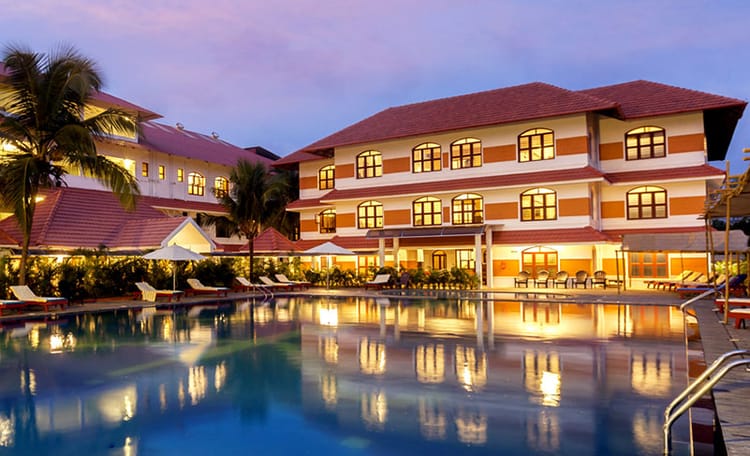
Then the ones specific to a fortnight alone: is single occupancy available without a large supplement? Are therapy rooms private or partitioned? How many rooms does the centre have in total, because a 20-room centre and a 200-room resort produce completely different stays regardless of what the treatment protocol says.
None of this appears on retreat websites, which is why we collect it. Every listing records room count, occupancy options, therapist and doctor ratios, and what each centre is genuinely strongest at — some are known for musculoskeletal work, others for stress and sleep, others for post-viral recovery. Matching that to your reason for going matters more than the photographs do.
Where to start
If you're at the stage of comparing centres, browse the full directory. Every centre listed has been visited by our team, and each entry sets out what the place is best known for, the doctor and therapist ratios, room count and occupancy options, female therapist availability, and an honest account of what a stay actually feels like not the brochure version.
If you're at the earlier stage of not knowing whether a retreat is even the right move, start with a free consultation. One of our physicians will go through your history, your medication, your cycle timing and your reason for going, and tell you which kind of programme fits — or whether the honest answer is to see your own doctor first. It's a matching conversation, not a sales call, and there's no obligation to book anything with us afterwards.
If you're travelling from outside India, the AYUSH visa guide covers the paperwork and how far ahead to start.
It isn't a holiday, and it isn't a spa week. If deep rest in a beautiful place is what you want, that's a completely legitimate thing to want — and you'd be better served by a good wellness retreat than by paying for medical infrastructure you don't need. Our Free Doctor Consultation covers how to tell them apart.
Frequently Asked Questions
Can I do Panchakarma during my period?
The main eliminative therapies (virechana, basti, and vamana) are generally paused during active menstruation, because menstruation is already an eliminative process and combining the two can worsen cramping and bleeding. Gentler therapies such as light abhyanga avoiding the abdomen, and shirodhara, often continue at the physician's discretion, and diet and internal medicines continue throughout. Tell your physician your expected dates before you book, and ask how missed treatment days are handled.
Will I have a female therapist for my treatments?
At reputable centres, yes same-gender therapists are standard practice for hands-on therapies. It is not universally guaranteed, particularly at resort spas using contract staff or in peak season. Ask specifically whether female therapists will cover your entire stay including staff leave, and how many the centre employs.
Is it safe to travel to an Ayurvedic retreat in Kerala alone as a woman?
Solo women guests are common at Kerala's established residential centres and staff are used to accommodating them. Prioritise residential centres over ones requiring daily travel, check whether a female physician or attendant is available for consultations, and confirm that airport transfers use the centre's own drivers.
Can I do Panchakarma if I'm on the pill, or on medication?
Yes, with disclosure and physician oversight. Tell both your prescribing doctor and the retreat physician exactly what you take. No legitimate centre will ask you to stop a prescribed medication, including hormonal contraception, in order to undergo treatment.
How long should a first retreat be?
Fourteen to twenty-one days for a full Panchakarma programme, with seven days as a realistic minimum for something more limited. For women, the longer stay also absorbs a menstrual pause without losing most of the treatment.
Written and reviewed by Dr. Hridya Thilakan, BAMS. This is general information only, and not a diagnosis or treatment recommendation for any individual. Please speak to your respective doctor about persistent symptoms and before travelling for treatment if you take prescription medication.