
Wellness vs Healing in Ayurveda: Complete Guide to Natural Health & Detox
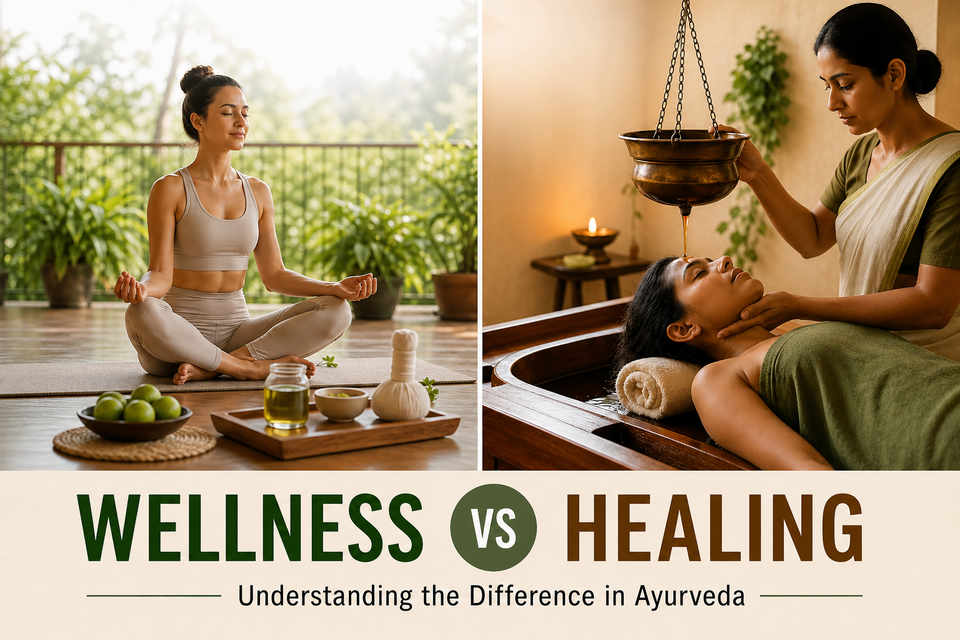
When people search for Ayurveda, they often look for solutions like natural healing, detox, stress relief or treatment for chronic diseases. But Ayurveda is not just about curing illness, it is equally about preventive healthcare, daily wellness and long-term balance.
This is where two powerful concepts come in: Wellness (Swasthya Raksha) and Healing (Vyadhi Chikitsa).
Understanding the difference between wellness and healing in Ayurveda can help you choose the right approach whether you want to stay healthy naturally or recover from an existing condition.
What is Wellness in Ayurveda
- The Preventive Healthcare Approach
In Ayurveda, wellness means achieving a perfect balance of body, mind and lifestyle, not just being free from disease.
According to Ayurvedic principles, true wellness includes:
- Balanced digestion (Agni)
- Proper elimination of toxins (Ama)
- Stable mental health
- Emotional resilience
- Harmonious lifestyle
Ayurveda answers all of these through a preventive and lifestyle-based approach.
How Ayurveda Promotes Holistic Wellness
Ayurvedic wellness focuses on multiple dimensions of health, making it one of the most holistic health systems in the world.
Physical Wellness: Detoxification, Immunity & Gut Health
Ayurveda uses Panchakarma therapies to:
- Remove deep-rooted toxins (Ama detox)
- Improve digestion and metabolism
- Boost natural immunity
- Increase energy levels
Regular detox therapies help maintain a disease-free and active body, making Panchakarma one of the most effective tools for preventive healthcare.
Mental Wellness: Stress Reduction & Nervous System Balance
With rising searches around stress, anxiety and burnout, Ayurveda offers natural solutions through:
- Meditation practices
- Pranayama (breathing techniques)
- Sleep regulation (Nidra management)
These help:
- Calm the nervous system
- Improve focus and clarity
- Reduce anxiety and mental fatigue
Emotional Wellness: Managing Stress & Building Stability
Ayurveda recognizes emotional health as a key pillar of overall wellness.
Through:
- Lifestyle corrections
- Daily routines (Dinacharya)
- Herbal support
it helps individuals:
- Manage emotional triggers
- Reduce stress naturally
- Develop a positive mindset
Social & Lifestyle Wellness: Living in Harmony
Ayurveda goes beyond the individual and emphasizes:
- Connection with nature
- Community wellness practices
- Yoga and group healing experiences
This supports long-term mental peace and social well-being, which is increasingly becoming a major search trend in holistic health.
Why Ayurvedic Wellness Matters
The wellness approach in Ayurveda is designed to:
- Prevent diseases before they start
- Improve quality of life
- Maintain long-term vitality
- Support healthy aging
In simple terms- Ayurveda helps you stay well naturally.
What is Healing in Ayurveda
- The Root Cause Treatment Approach
When illness occurs, Ayurveda shifts from prevention to deep healing and restoration.
Unlike conventional treatments that often focus on symptoms, Ayurvedic healing focuses on:
- Identifying the root cause
- Correcting internal imbalances
- Detoxifying the body
- Restoring natural equilibrium
The Ayurvedic Healing Process: Step-by-Step
1. Dosha Analysis (Vata, Pitta, Kapha Imbalance)
Every disease in Ayurveda begins with an imbalance in the three doshas:
- Vata (movement & nervous system)
- Pitta (metabolism & digestion)
- Kapha (structure & immunity)
Identifying the dominant imbalance is the foundation of Ayurvedic diagnosis.
2. Shamana Chikitsa (Pacification Therapy)
This stage focuses on reducing symptoms through:
- Ayurvedic herbal medicines
- Personalized diet plans
- Lifestyle corrections
It helps stabilize the aggravated dosha and provides relief.
3. Shodhana Chikitsa (Ayurvedic Detox & Panchakarma)
For deeper healing, Ayurveda uses detoxification therapies to eliminate toxins from the body.
Key therapies include:
- Snehana (oil therapy) – loosens toxins
- Swedana (steam therapy) – mobilizes toxins
- Panchakarma detox, which includes:
- Vamana (therapeutic emesis)
- Virechana (purgation therapy)
- Basti (medicated enema therapy)
- Nasya (nasal detox therapy)
- Raktamokshana (blood purification)
4. Nidana Parivarjana (Eliminating Root Causes)
One of the strongest aspects of Ayurveda. It focuses on removing:
- Poor dietary habits
- Sedentary lifestyle
- Stress and emotional imbalance
Without addressing the root cause, healing is incomplete and Ayurveda emphasizes this deeply.
5. Supportive Healing Practices
To enhance recovery, Ayurveda integrates:
- Yoga therapy
- Meditation
- Pranayama
These support both physical healing and mental well-being, making the process truly holistic.
Wellness vs Healing in Ayurveda: Key Differences
Why You Need Both: Preventive & Curative Ayurveda
A common mistake people make is turning to Ayurveda only after illness begins. But the real strength of Ayurveda lies in combining both:
- Wellness practices prevent disease
- Healing therapies treat and reverse imbalance
This dual approach makes Ayurveda one of the most effective systems for long-term health and disease management.
Ayurveda for Modern Lifestyle Problems
With increasing lifestyle disorders such as:
- Stress and anxiety
- Digestive issues
- Hormonal imbalance
- Chronic fatigue
Ayurveda provides natural, sustainable and side-effect-free solutions through both wellness and healing approaches.
Begin Your Ayurvedic Journey
Whether your goal is to:
- Improve daily health
- Detox your body naturally
- Boost immunity
- Heal from chronic conditions
Ayurveda offers a personalized path to balance, vitality and long-term well-being.
Conclusion
Wellness and healing in Ayurveda work together- one helps you stay balanced, the other restores balance when needed. The key is choosing the right approach for your current health.
- Wellness keeps you balanced and disease-free
- Healing restores balance when disease occurs
At WellnessLoka, we simplify this journey by connecting you with authentic, medically verified Ayurvedic retreats. We also offer a free doctor consultation to help you understand your needs and choose the right program.
Ready to begin? Fill out our quick form and get personalized Ayurvedic retreat recommendations tailored to you.
Frequently Asked Questions
What is the difference between wellness and healing in Ayurveda?
Wellness in Ayurveda focuses on prevention, maintaining balance through diet, lifestyle and daily routines. Healing, on the other hand, focuses on treating existing imbalances or diseases through therapies, detox (Panchakarma), and personalized care. Both work together for complete, long-term health.
Is Ayurveda better for prevention or treatment?
Ayurveda is effective for both prevention and treatment. It helps prevent disease through daily wellness practices and strengthens the body’s natural immunity. At the same time, it treats existing conditions by addressing the root cause, not just symptoms, making it a holistic system of healthcare.
Who should choose Ayurvedic wellness vs healing programs?
Ayurvedic wellness programs are ideal for those looking to improve overall health, detox and prevent illness. Healing programs are designed for individuals dealing with chronic conditions, stress or imbalances. Choosing the right one depends on your current health condition and goals.